
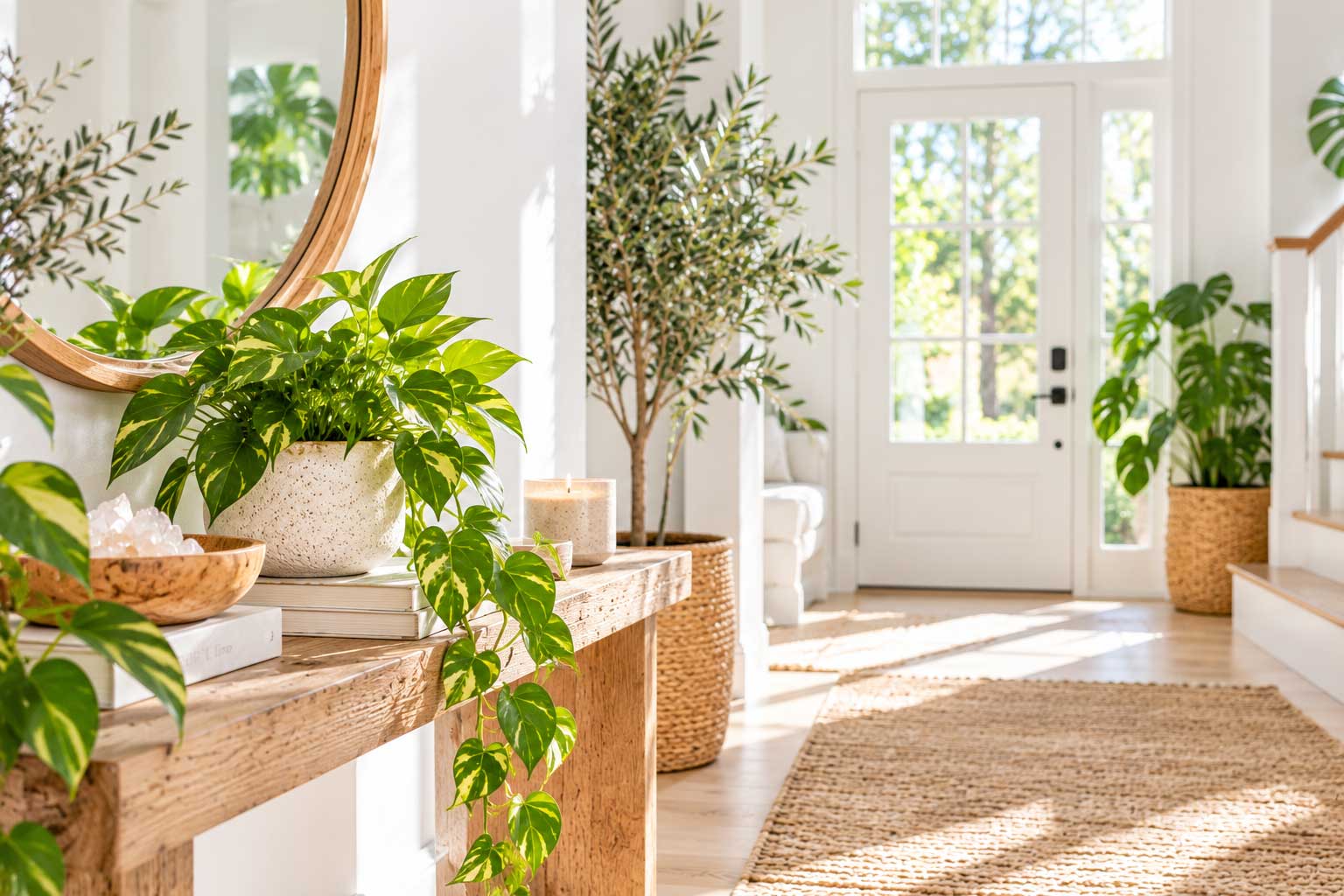
Plants can make a home feel alive, warm, and connected to nature. But there is a fine line between a beautifully layered plant-filled home and a space that simply feels crowded.
There is something almost irresistible about bringing home another plant.
You find the perfect spot for one. Then another appears on the windowsill. A trailing plant finds its way onto a shelf. Before long, every empty surface seems like an opportunity for something green.
And honestly, there is nothing wrong with loving plants.
The secret is learning how to make them feel like part of the room rather than objects that were simply added to it.
Decorating with plants is really an exercise in balance. Scale, repetition, color, height, and even the empty spaces between plants can completely change how a room feels.
Think of Plants as Part of the Interior Design
One of the easiest mistakes to make is treating plants as accessories that need to fill every available corner.
Instead, think about them the same way you would think about furniture, artwork, or lighting.
A tall plant can create height beside a sofa. A trailing plant can soften a shelf. A small plant can bring life to a quiet corner of a kitchen or desk.
Once plants have a purpose within the composition of the room, the space immediately begins to feel more intentional.
“Plants should become part of the room, not compete with it.”
Let Scale Do the Work

Ten small plants scattered around a room can sometimes create more visual clutter than two or three larger plants placed intentionally.
Try mixing different scales instead.
A large floor plant can anchor a corner, while one medium plant and a smaller accent nearby create variation without filling every surface.
The eye naturally enjoys contrast. Different heights create movement and allow each plant to have its own presence.
Group Instead of Scatter
If you have several smaller plants, resist the temptation to spread them throughout the entire room.
Grouping two or three plants together can actually make the space feel calmer.
Choose plants with different heights or leaf shapes and let them form a small composition. A trio on a console table or a few plants gathered near a bright window can look intentional rather than busy.
The same principle works with pots. They do not need to match, but repeating similar materials or colors helps create visual continuity.
Don’t Forget the Empty Space
This may be the most important rule of all.
Not every shelf needs something on it. Not every corner needs a plant. And not every window needs to become a miniature greenhouse.
In interior design, negative space gives the eye somewhere to rest.
The same is true when decorating with plants.
Leaving a little breathing room around your greenery allows the shape, texture, and color of the leaves to stand out. Often, one beautiful plant surrounded by space has more impact than five competing for attention.
“Sometimes the space around an object is what allows us to really see it.”
Use Height Instead of More Surfaces

When tables and shelves begin to feel crowded, look upward.
Hanging plants, tall floor plants, plant stands, and window displays allow you to bring greenery into a room without covering every horizontal surface.
Vertical styling also creates movement. Your eye travels from the floor toward the window or ceiling, which can make the room feel taller and more dynamic.
Keep the Pots Visually Connected
Plants already introduce plenty of variation through their leaves, shapes, and textures. If every planter also has a completely different color, pattern, and style, the room can quickly become visually noisy.
You do not need identical pots.
Instead, create a loose palette. Warm ceramics, terracotta, cream, natural stone, woven baskets, or soft earthy colors work beautifully together while still allowing each piece to feel collected rather than matched.
This is especially effective in modern boho interiors, where texture creates interest without needing excessive color or decoration.
Let Light Decide Where Plants Belong
A plant may look perfect in a particular corner, but ultimately its placement also needs to work for the plant itself.
Instead of forcing greenery into every part of the room, notice where natural light already falls and build your plant moments around those areas.
A sunny window can become a beautiful focal point. A bright corner may need only one larger plant. Even the changing shadows of leaves throughout the day can become part of the atmosphere of the room.
When placement works with the natural conditions of the home, it usually looks more effortless too.
Remember That Greenery Doesn’t Always Mean a Full-Size Plant

One of my favorite ways to bring greenery into smaller spaces is through propagation.
A single cutting growing in water can add life to a window, desk, kitchen, or quiet corner without adding the visual weight of another planter.
There is also something beautiful about watching roots slowly develop in water. The plant becomes more than decoration—it becomes a small, changing part of the room.
This works especially well when you already have several mature plants and want to introduce another touch of green without making the space feel crowded.
A Plant-Filled Home Still Needs to Breathe
A home filled with plants does not have to feel like a jungle.
The goal is not to count how many plants you can fit into a room. It is to create a relationship between greenery and the space around it.
Choose a few places where plants can really make an impact. Play with height. Repeat materials. Leave some surfaces empty. And allow natural light to become part of the composition.
When plants are given enough room to breathe, something wonderful happens.
The entire home begins to breathe with them.
“A plant-filled home doesn’t need more plants. It needs the right plants in the right places.”
A Little Green, A Little Light
At Crazy Bohemians, I love finding simple ways to bring plants, natural light, and meaningful details into everyday spaces.
Our handmade propagation stations were created with that same idea in mind—a small way to grow something beautiful without taking over the room.