
Plants have always carried a quiet kind of magic. Long before interior design trends existed, people brought plants into their homes to invite life, protection, and prosperity. In Feng Shui, certain plants are believed to attract good luck, harmony, and positive energy. Interestingly, the reason may be simpler than we think: living things naturally shift the atmosphere of a space.
When sunlight touches leaves and air moves gently around living plants, a home begins to feel different. Softer. More alive. In Feng Shui philosophy, plants represent the wood element, which symbolizes growth, renewal, and vitality. Because of this, plants are often used to activate stagnant spaces and invite fresh energy into a home.
For centuries, certain varieties have become known as plants that attract good luck. Whether placed near a sunny window, beside an entrance, or in a peaceful corner of a room, these plants are believed to encourage prosperity, emotional balance, and gentle forward movement in life.
The Jade Plant: A Symbol of Prosperity
The Jade Plant has long been associated with abundance and prosperity. Its small, rounded leaves resemble tiny coins, which is why it’s often referred to as the “money plant” in Feng Shui traditions.

Because of this symbolism, many people place jade plants near entrances, offices, or workspaces where financial growth and opportunities are welcomed. Over time, the plant grows slowly and steadily, reinforcing the idea that prosperity often develops through patience and consistency.
Beyond symbolism, jade plants are also beautifully sculptural. Their thick stems and glossy leaves bring a quiet sense of stability to a room.
- Represents prosperity and financial abundance
- Slow, steady growth symbolizes long-term stability
- Thrives in bright light near windows
Living plants quietly remind a home that growth is always possible.
Lucky Bamboo: Harmony and Balance
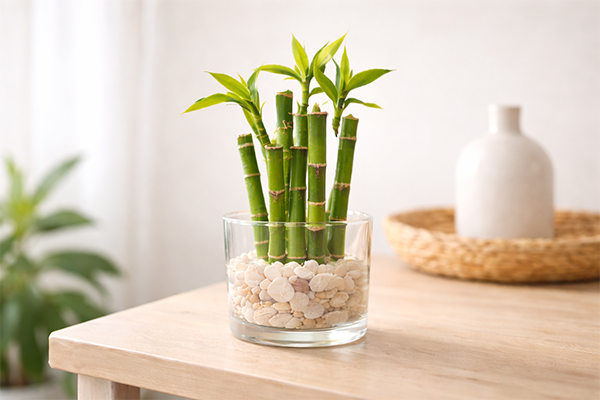
Lucky Bamboo is one of the most recognized plants in Feng Shui. Despite its name, it isn’t technically bamboo, but its elegant vertical stalks symbolize resilience, flexibility, and steady growth.
In Feng Shui practice, the number of bamboo stalks often carries meaning. Three stalks are believed to represent happiness, wealth, and longevity. Five stalks symbolize balance and well-being.
Lucky bamboo is especially loved because of its clean, sculptural appearance. It fits beautifully into calm spaces like living rooms, meditation corners, or minimalist interiors where its shape can stand quietly on its own.
This is one of the most popular plants that attract good luck, particularly because it combines symbolism with simplicity.
- Represents harmony and life balance
- Elegant vertical growth encourages upward energy
- Thrives in soft light and water arrangements
Pothos: The Gentle Energy Cleanser
Pothos plants are loved for their graceful trailing vines and vibrant heart-shaped leaves. In Feng Shui, they are often considered energetic “cleaners” that help soften sharp corners and stagnant areas.
Because pothos grows easily and flows downward in soft curves, it creates movement within a room. This visual movement is important in Feng Shui, where stagnant or rigid spaces can sometimes feel heavy or stuck.
Placing pothos on shelves, bookcases, or hanging planters allows its vines to cascade naturally. As a result, the plant introduces both visual softness and energetic flow into the home.
- Softens corners and architectural edges
- Encourages visual and energetic flow
- Thrives in many lighting conditions
Snake Plants: Protection and Strength
Snake plants are striking and powerful, both visually and symbolically. Their upright, sword-like leaves represent strength, resilience, and protection.

In Feng Shui, vertical shapes help anchor a space and create stability. Snake plants are therefore often placed in areas where grounding energy is desired, such as living rooms, entryways, or workspaces.
Beyond symbolism, snake plants are also known for their air-purifying qualities and ability to thrive in a variety of conditions. Their bold structure can make a room feel balanced and calm.
For many homes, snake plants become quiet guardians of the space, bringing both beauty and stability.
Where to Place Plants for Good Feng Shui
Even the best plants that attract good luck work best when placed thoughtfully. Feng Shui encourages placing living plants where they can receive natural light and where their presence enhances the flow of energy in a home.
Some of the most common locations include:
- Near the entrance: welcoming fresh energy into the home
- Living rooms: encouraging harmony and balance
- Workspaces: supporting focus, creativity, and prosperity
What matters most is that plants feel integrated into the space rather than forced into it. When plants are placed naturally, they become part of the rhythm of the home.
Why Sunlight Matters
Plants, light, and energy are deeply connected. In Feng Shui, natural light activates the life force of a space, often called chi. When sunlight touches living plants, it creates movement and vitality that can subtly change the feeling of a room.
This is why many of the most effective plants that attract good luck are placed near windows where sunlight can nourish them.
The combination of living greenery and natural light often transforms a room in ways that feel immediate and intuitive. A once quiet corner begins to feel vibrant. A room that felt heavy begins to feel open.
Sometimes, small changes create the most noticeable shifts.
Let Nature Change the Atmosphere
Ultimately, the real magic of plants may not come from superstition, but from presence. Living plants bring growth, light, and movement into our homes. They soften spaces, brighten corners, and quietly remind us that life is always evolving.
Sometimes, inviting a little greenery inside is all it takes to change the energy of a room.