
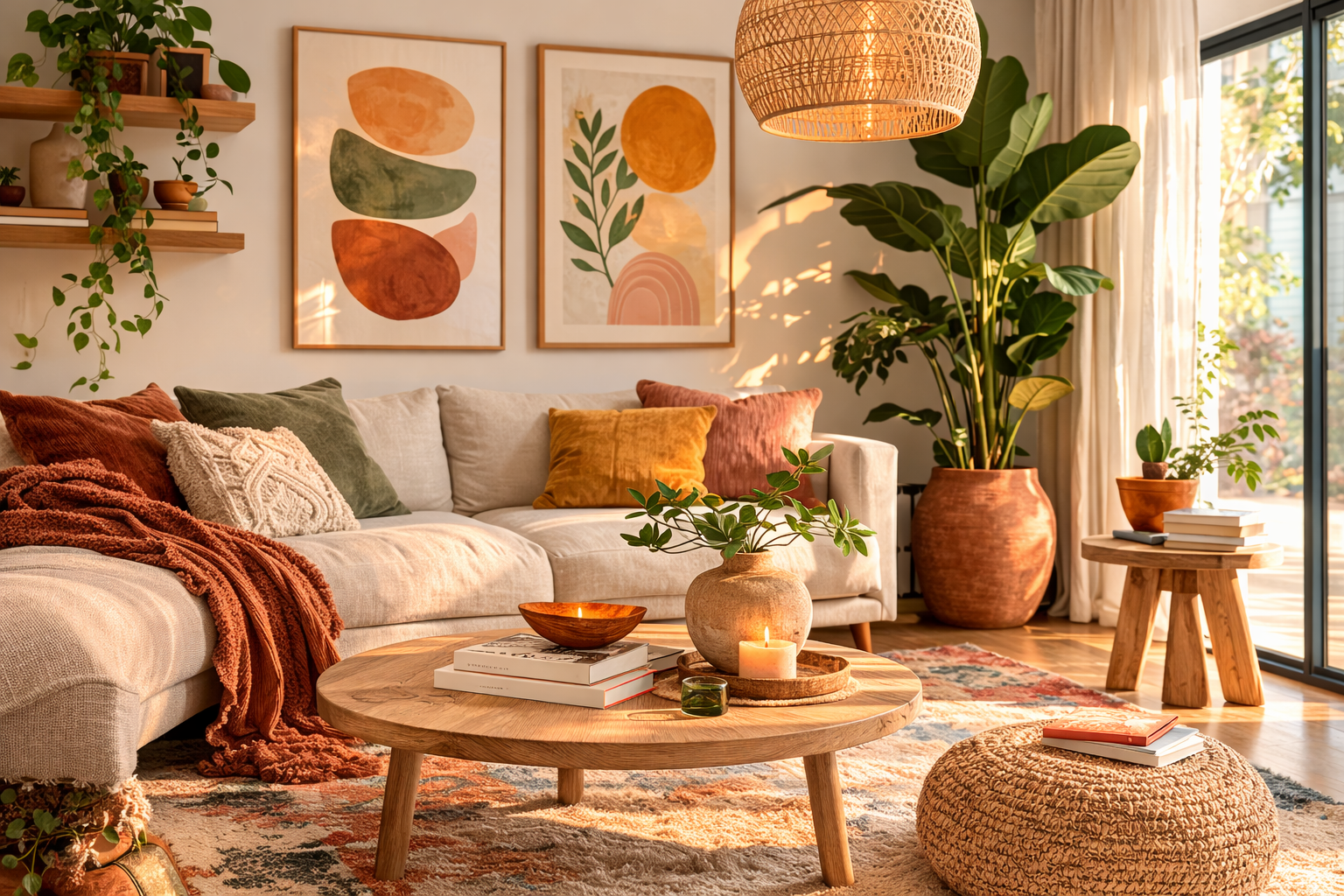
Color is never just visual. It is emotional, atmospheric, and deeply personal. The tones we choose for our homes quietly influence how we feel, how we move through our spaces, and even how we experience everyday life.
Many people think decorating is about matching palettes or following trends. However, creating a home that feels truly aligned begins with understanding how color interacts with mood, light, and intention. When chosen consciously, color can transform a space from neutral to nurturing, from static to alive.
Soft Neutrals and the Language of Calm
Soft whites, warm beiges, light woods, and gentle earth tones create an immediate sense of grounding. These shades allow the nervous system to relax, making rooms feel breathable and emotionally safe. In addition, neutral environments reflect natural light beautifully, enhancing the feeling of openness.
This is why Scandinavian Boho interiors often feel peaceful. They prioritize clarity, space, and subtle texture instead of visual overload. When neutrals dominate, even small decorative accents can become meaningful focal points.
Vibrant Colors and Emotional Activation
While calm spaces are essential, homes also benefit from moments of emotional activation. Vibrant colors introduce energy, creativity, and joy. Unexpected pops of color can transform the atmosphere of a room, making it feel expressive and alive.
Dopamine decor embraces this idea by encouraging playful combinations, bold accents, and intuitive styling. Whether through textiles, artwork, crystals, or handmade objects, color becomes a tool for emotional storytelling rather than strict design rules.
Color does not simply decorate a space — it shapes how we experience it.
How Light Transforms Color
Natural light changes everything. A tone that feels soft in the morning may become vibrant in the afternoon. Shadows introduce depth, reflections create movement, and sunlight can reveal subtle undertones we rarely notice at first glance.
Reflective decor elements, such as faceted crystals or glass textures, amplify this transformation. As light travels through them, colors appear dynamically throughout the room, creating a living visual experience that evolves during the day.
Layering Colors with Intention
Rather than choosing between calm neutrals and vibrant accents, the most emotionally balanced homes layer both. A grounded base palette combined with expressive highlights creates harmony without monotony.
For example, a neutral sofa can be complemented by colorful cushions, handmade decor pieces, or plant accents that introduce vitality. This layered approach allows spaces to feel curated yet spontaneous, intentional yet free.
Designing Spaces That Reflect You
Ultimately, color is about identity. Homes that feel emotionally supportive often reflect the personality and experiences of those who live in them. When you trust your instinct and allow color to guide your choices, your environment becomes more authentic.
Creating an emotionally resonant home does not require perfection. It requires awareness, experimentation, and the willingness to evolve. Over time, color becomes a quiet companion in your daily life — shaping how you feel without demanding attention.
Living in Color
When light, texture, and color work together, homes begin to feel alive. They become spaces where emotion is welcomed, creativity is encouraged, and everyday moments feel more meaningful.
Color is not just something we see. It is something we live.