
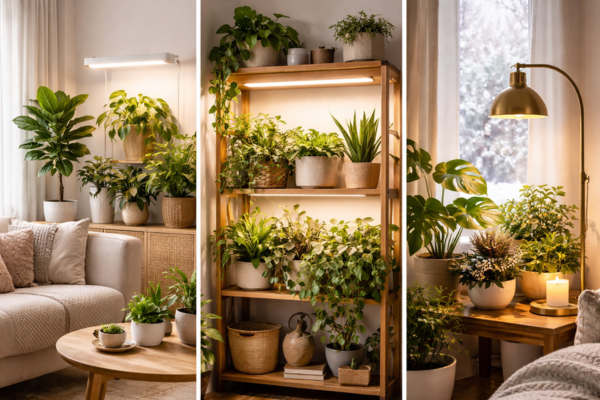
Understanding how grow lights for indoor plants work can dramatically improve success with indoor gardening. Many homes simply do not provide enough consistent natural light for herbs, foliage plants, or small indoor gardens to thrive year-round.
As indoor gardening becomes more popular in apartments and urban homes, artificial lighting has evolved into a practical tool rather than a niche solution. Modern grow lights are energy-efficient, compact, and capable of supporting plant growth even in rooms with limited sun exposure.
“Light is one of the most important factors in indoor plant health, often more critical than watering or fertilizer.”
Before investing in equipment, it helps to understand when grow lights are actually necessary and how they influence plant development.
Why Natural Light Is Often Not Enough
Indoor environments filter and reduce sunlight in several ways. Window glass, building orientation, seasonal daylight variation, and nearby structures can all limit the amount of usable light plants receive.
Even rooms that feel bright to humans may provide insufficient intensity for photosynthesis. Herbs such as basil and rosemary, as well as many tropical foliage plants, often struggle when placed too far from a direct light source.
This is where grow lights for indoor plants become especially useful. They help replicate the light spectrum plants need to maintain steady growth.
What Grow Lights Actually Do
Grow lights are designed to emit wavelengths that support photosynthesis. Unlike decorative lamps, they provide targeted light that encourages leaf production, root strength, and overall plant vitality.
Modern LED grow lights are particularly popular because they generate minimal heat while offering high energy efficiency. This makes them suitable for small apartments or compact indoor gardens.

When You Really Need Grow Lights
Not every home requires artificial lighting. If you have large south-facing windows and consistent sunlight throughout the day, many indoor plants can grow successfully without additional equipment.
However, grow lights become valuable in specific situations. Homes with shaded views, winter gardening routines, or deep interior layouts often benefit from supplemental lighting. Additionally, plant collections placed on shelves or corners far from windows usually require artificial support.
If you are unsure about your setup, you may also want to read our guide on indoor gardening mistakes or our post on the best herbs to grow indoors.
How to Choose the Right Grow Light
Choosing the right grow light depends on plant type, available space, and desired aesthetic. Full-spectrum LED lights are typically recommended because they mimic natural daylight and support a wide range of indoor plants.
Placement also matters. Lights positioned too far away reduce effectiveness, while lights placed too close may cause leaf stress. Adjustable fixtures or clip-on designs can help fine-tune positioning.
In addition, using timers ensures plants receive consistent daily exposure, which helps regulate growth cycles.
Balancing Light with Other Care Factors
While lighting is crucial, it works best when combined with proper watering, soil structure, and airflow. Overcompensating with strong artificial light cannot fix underlying issues such as poor drainage or incorrect plant selection.
Indoor gardening success usually comes from balancing several environmental elements rather than relying on a single solution.

Final Thoughts on Grow Lights for Indoor Plants
Grow lights for indoor plants are not always necessary, but they can dramatically improve growth in low-light homes or during darker seasons. Understanding your space and observing plant responses is the best way to determine whether supplemental lighting will make a difference.
For more research-based information about plant lighting and indoor growing conditions, you can explore guidance from Penn State Extension, University of Florida IFAS, and the Missouri Botanical Garden.