
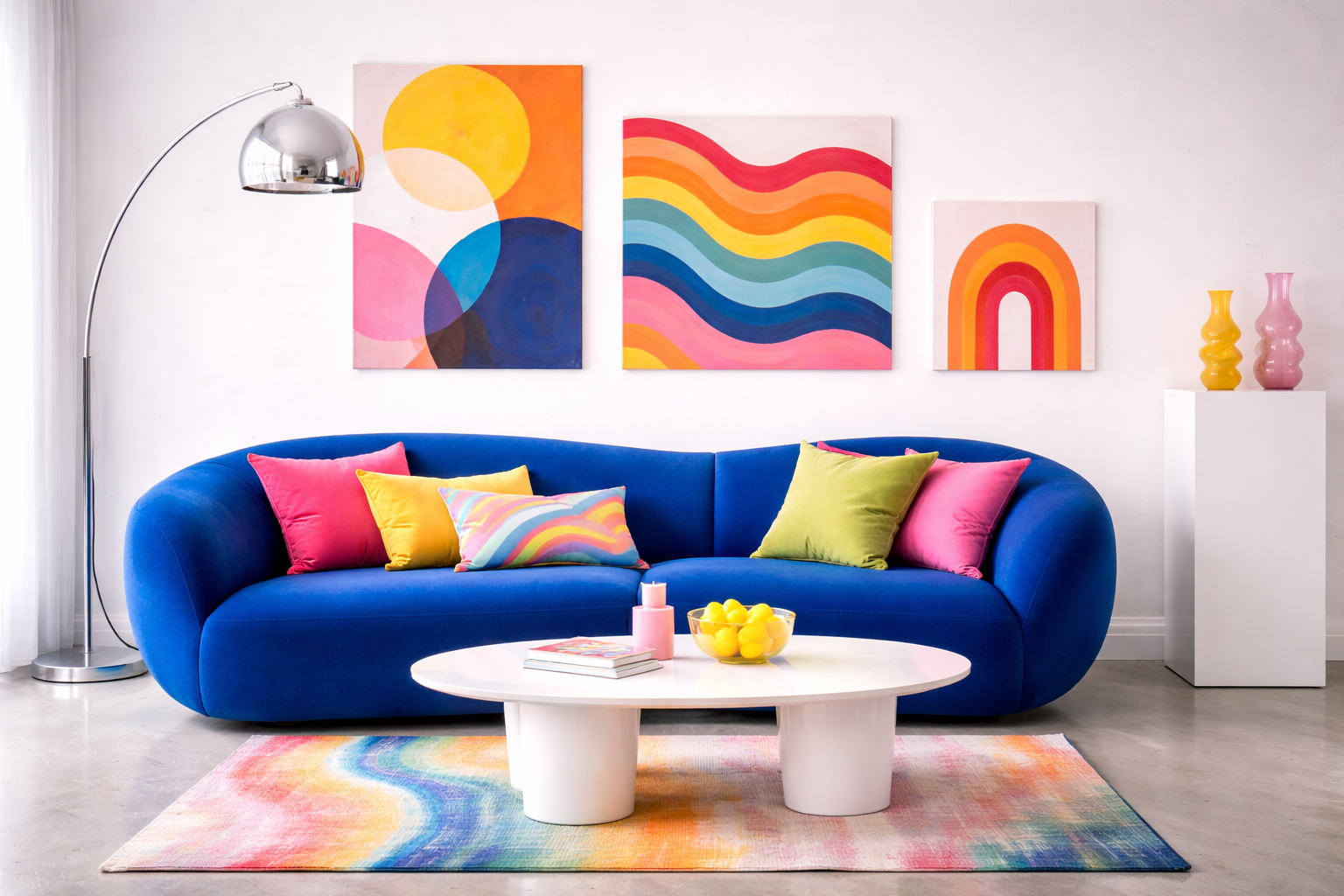
Some homes are visually beautiful. Others feel emotionally alive. Dopamine decor belongs to this second category. It is not simply about adding bright colors or following trends. It is about intentionally shaping environments that support mood, creativity, and everyday well-being.
In recent years, interiors have shifted away from rigid minimalism toward more expressive and personal design approaches. People are beginning to understand that the spaces they inhabit influence their energy, their habits, and even their sense of possibility. Dopamine decor responds to this awareness by encouraging joyful choices that feel authentic rather than performative.
What Dopamine Decor Really Means
At its core, dopamine decor is an emotional design philosophy. Instead of decorating based solely on visual harmony or social expectations, it invites you to prioritize how a space makes you feel. A vibrant chair, a sculptural lamp, or a colorful artwork can become more than decorative elements. They can act as subtle emotional triggers that influence daily experience.
Modern interpretations of dopamine interiors are more refined than early maximalist versions. Today’s joyful spaces often combine clean architectural lines with bold focal points. Neutral backdrops allow saturated tones to stand out with intention. This balance prevents visual fatigue while maintaining a sense of energy and movement.
“Joy is not accidental. It can be designed.”
Color as Emotional Language
Color has a profound impact on perception. Deep blues and greens can introduce clarity and calm stimulation. Warm corals and terracotta tones generate comfort and connection. Electric accents — such as neon pink, lime, or cobalt — create visual excitement that keeps interiors feeling dynamic and alive.
The key is not quantity but placement. A single expressive piece can redefine the atmosphere of an entire room. When vibrant elements are repeated thoughtfully across different materials, they create rhythm. This visual continuity transforms color from decoration into emotional architecture.
- Use one dominant color as an anchor
- Introduce contrast through smaller accents
- Combine bold tones with neutral grounding elements
Light and Movement in Joyful Interiors
Natural light amplifies the effects of dopamine decor. Throughout the day, sunlight interacts with surfaces, altering how colors are perceived. Morning light may sharpen contrasts, while late afternoon tones soften and deepen palettes. Designing with awareness of light allows spaces to feel constantly evolving.

Reflective objects, glass elements, and glossy finishes can enhance this sense of movement. Even subtle shifts — such as repositioning artwork or decor to catch changing light — can transform how a home feels on a daily basis.
Minimalism and Expression Can Coexist
A common misconception is that dopamine decor requires clutter or excess. In reality, modern joyful interiors often rely on restraint. Empty space provides visual breathing room, allowing statement pieces to become meaningful focal points rather than competing for attention.
Sculptural furniture, geometric compositions, and bold art placements can introduce personality without overwhelming the senses. This curated approach creates interiors that feel intentional, contemporary, and emotionally engaging.
The Power of Handmade and Personal Objects
Handmade decor introduces warmth and authenticity into dopamine-inspired environments. Visible brushstrokes, organic textures, and imperfect forms remind us that beauty does not need to be manufactured or standardized. These elements create emotional connection and narrative depth.
Colorful abstract art, artisan ceramics, or meaningful travel objects can function as symbolic anchors within a space. Over time, they become part of the home’s evolving identity, reflecting personal growth and creative exploration.
Designing Micro-Moments of Joy
Transformation does not always require large redesign projects. Often, the most impactful changes are subtle. A vibrant bowl placed on a kitchen island. A colorful throw draped over a reading chair. A plant positioned where shadows move gently across the wall.
These micro-moments accumulate, shaping how inhabitants experience their home. When spaces consistently offer visual stimulation and emotional comfort, they begin to support creativity, relaxation, and optimism in lasting ways.
A Living Interior
Dopamine decor reminds us that interiors are not static compositions. They are living environments that evolve alongside our moods and intentions. By embracing expressive color, meaningful objects, and the quiet power of light, we can design homes that do more than look beautiful. We can create spaces that actively support the way we want to feel and live.