
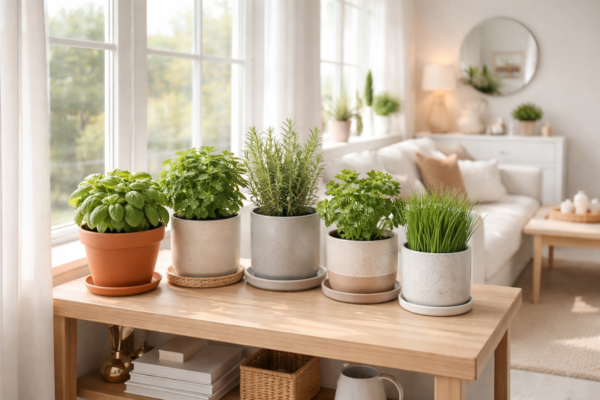
If you are looking for the best herbs to grow indoors, the good news is that many culinary favorites adapt beautifully to indoor spaces. Whether you live in a small apartment or simply want fresh flavor within reach, growing herbs inside is one of the easiest ways to start an indoor garden at home.
The best herbs to grow indoors combine practical use, compact growth, and relatively simple care. In addition, they bring freshness, texture, and greenery into kitchens, breakfast corners, and sunny windowsills. With the right light, watering habits, and containers, an indoor herb garden can stay productive throughout the year.
“An indoor herb garden is one of the simplest ways to make a home feel more functional, fresh, and alive.”
If you are new to indoor gardening, choosing the right herbs makes all the difference. Some herbs grow quickly and forgive small mistakes, while others need more precise light and watering conditions. Below are some of the best options for beginners and small-space gardeners.
The Best Herbs to Grow Indoors for Beginners
When choosing the best herbs to grow indoors, it helps to start with varieties that adapt well to containers and indoor light conditions. Basil, mint, rosemary, parsley, and chives are all popular for a reason. They are useful in everyday cooking, they stay relatively manageable in pots, and they offer a strong return for the amount of care they need.
Basil: A Fast-Growing Kitchen Favorite
Basil is one of the most popular choices for indoor gardeners. It grows quickly, smells wonderful, and produces soft, flavorful leaves that work well in pasta, salads, and simple summer dishes.
To grow basil successfully indoors, place it near a bright south- or west-facing window. Basil needs warmth and several hours of strong light each day. It also benefits from regular pruning, since pinching the top leaves encourages fuller growth instead of long, thin stems.
Because basil likes evenly moist soil, it is best to water when the top layer starts to feel dry. However, avoid soggy soil, since overly wet roots can quickly cause problems.
Mint: Easy, Vigorous, and Beginner-Friendly
Mint is another one of the best herbs to grow indoors, especially for beginners. It grows quickly, adapts well to containers, and usually bounces back even if care is not perfect.
Unlike more sensitive herbs, mint can handle moderate light and does not require constant fussing. Even so, it still needs a pot with drainage and regular trimming to stay tidy. Since mint spreads aggressively outdoors, container growing indoors is often the easiest way to keep it under control.

Rosemary: Beautiful but More Particular
Rosemary brings structure and fragrance to an indoor herb collection. Its upright growth and woody texture make it visually different from softer herbs like basil or parsley.
That said, rosemary can be slightly harder to maintain indoors. It needs bright light, good airflow, and soil that drains very well. In addition, rosemary dislikes being overwatered, so it is better to let the soil dry somewhat between watering sessions. A sandy or gritty potting mix can help prevent excess moisture around the roots.
Parsley: Productive and Practical
Parsley is a useful everyday herb and a strong candidate for indoor growing. It tolerates slightly gentler light than basil or rosemary, which makes it practical for kitchens that do not get harsh direct sun all day.
Because parsley develops long roots, it does better in a deeper container. Rotating the pot every week can also help the plant grow more evenly. For steady harvests, trim the outer stems first rather than cutting the entire plant at once.
Chives: Compact and Reliable
Chives are ideal for smaller spaces because they stay upright and compact. They fit easily on narrow windowsills, and they regrow well after harvesting.
Using scissors to snip the leaves is the easiest way to harvest them neatly. Over time, mature clumps can be divided and replanted, which makes chives one of the most efficient herbs for long-term indoor gardening.
What Helps Indoor Herbs Thrive
Even the best herbs to grow indoors need the right environment to stay healthy. Light is usually the biggest factor. Most herbs need at least four to six hours of bright light every day, and some need even more. If your home does not get enough natural sun, a simple LED grow light can make a major difference.
Watering is also important, but overwatering is one of the most common indoor gardening mistakes. Always check the soil before adding more water. In addition, containers with drainage holes are essential because they help prevent root rot and improve airflow around the roots.
If you want to build on this topic, you can also read our future post on indoor gardening mistakes that kill plants fast and our guide to grow lights for indoor plants. For a related lifestyle read, see how to use light at home.

Final Thoughts on the Best Herbs to Grow Indoors
The best herbs to grow indoors are the ones that match your light conditions, your routine, and the way you actually cook. For most beginners, basil, mint, parsley, chives, and rosemary are excellent places to start.
Indoor gardening does not require a greenhouse or a large house. Instead, a bright window, a few well-chosen containers, and a simple care routine are often enough to create a productive herb garden indoors.
For more reliable plant care information, you can also explore resources from the Royal Horticultural Society, University of Minnesota Extension, and The Old Farmer’s Almanac.